research
Four themes, each paired with the papers behind it:
- Information Theory — correlated randomness for private learning, and why quantum entanglement helps two parties coordinate without talking.
- Explainable / Graph ML — what breaks in a GNN's explanations when the input distribution shifts, and how to fix it.
- Agentic Systems — giving LLM agents explicit escalation logic instead of open-ended autonomy.
- Generative Models — diffusion models applied to time series and graph structure, not just images.
CH.1 — Information Theory
Information theory of distributed and private learning
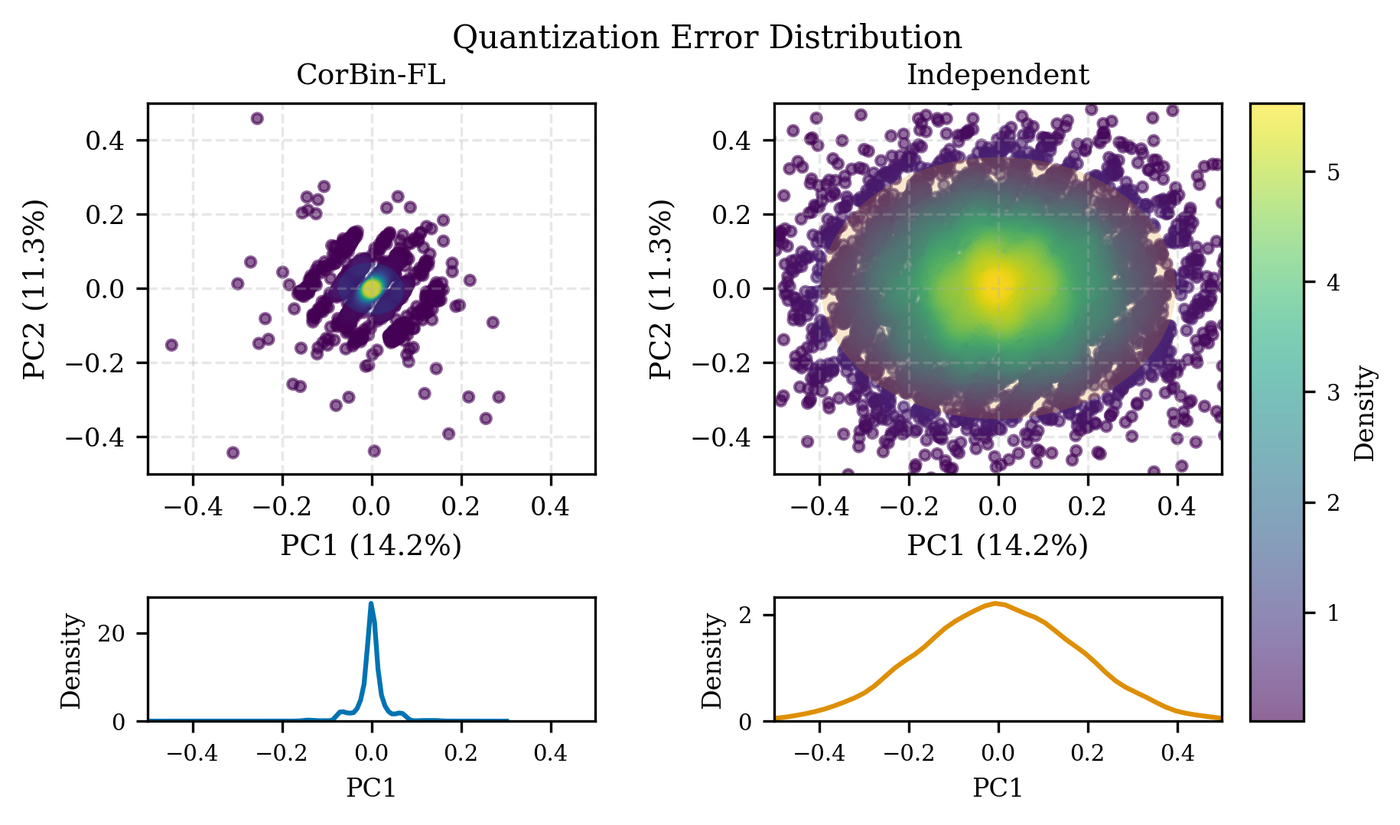
How much can two parties learn to coordinate using as little communication as possible, without ever exchanging their private data directly? Non-interactive source simulation asks that in its purest form: two parties see correlated but incomplete signals and must reproduce a joint distribution with no back-and-forth at all. The surprising result here is that letting the two parties share quantum entanglement instead of classical shared randomness gives a genuine, provable advantage — not just a faster way to the same answer. CorBin-FL turns a version of that same idea — correlated randomness instead of independent randomness — into a practical privacy mechanism for federated learning.
- T-IT 2025 On Non-Interactive Simulation of Distributed Sources with Finite Alphabets
- ISIT 2025 Quantum Advantage in Non-Interactive Source Simulation
- Preprint CorBin-FL: A Differentially Private Federated Learning Mechanism using Common Randomness
System: CorBin-FL →
CH.2 — Explainable / Graph ML
Explainable and graph ML
Graph neural network explanations — the subgraphs and features a model points to when justifying a prediction — are usually validated on the same data distribution the model was trained on. This work asks what breaks when they're not: the TPAMI paper characterizes how GNN explanations degrade under structural distribution shift, and the AAAI paper proposes an augmentation strategy that keeps explanations stable under exactly that kind of shift. A companion preprint replaces the binary (included/excluded) view of which features matter with a continuous, learned re-weighting, and LM²otifs applies the same explainability lens to a different domain — detecting authorship in text by finding the motifs a model actually relies on.
- TPAMI 2026 Addressing Structural Distribution Shift in Explanations for Graph Neural Networks
- AAAI 2026 Explanation-Preserving Augmentation for Semi-Supervised Graph Representation Learning
- Preprint From Binary to Continuous: Stochastic Re-Weighting for Robust Graph Explanation
- Preprint LM²otifs: An Explainable Framework for Text Authorship Detection
CH.3 — Agentic Systems
Agentic systems
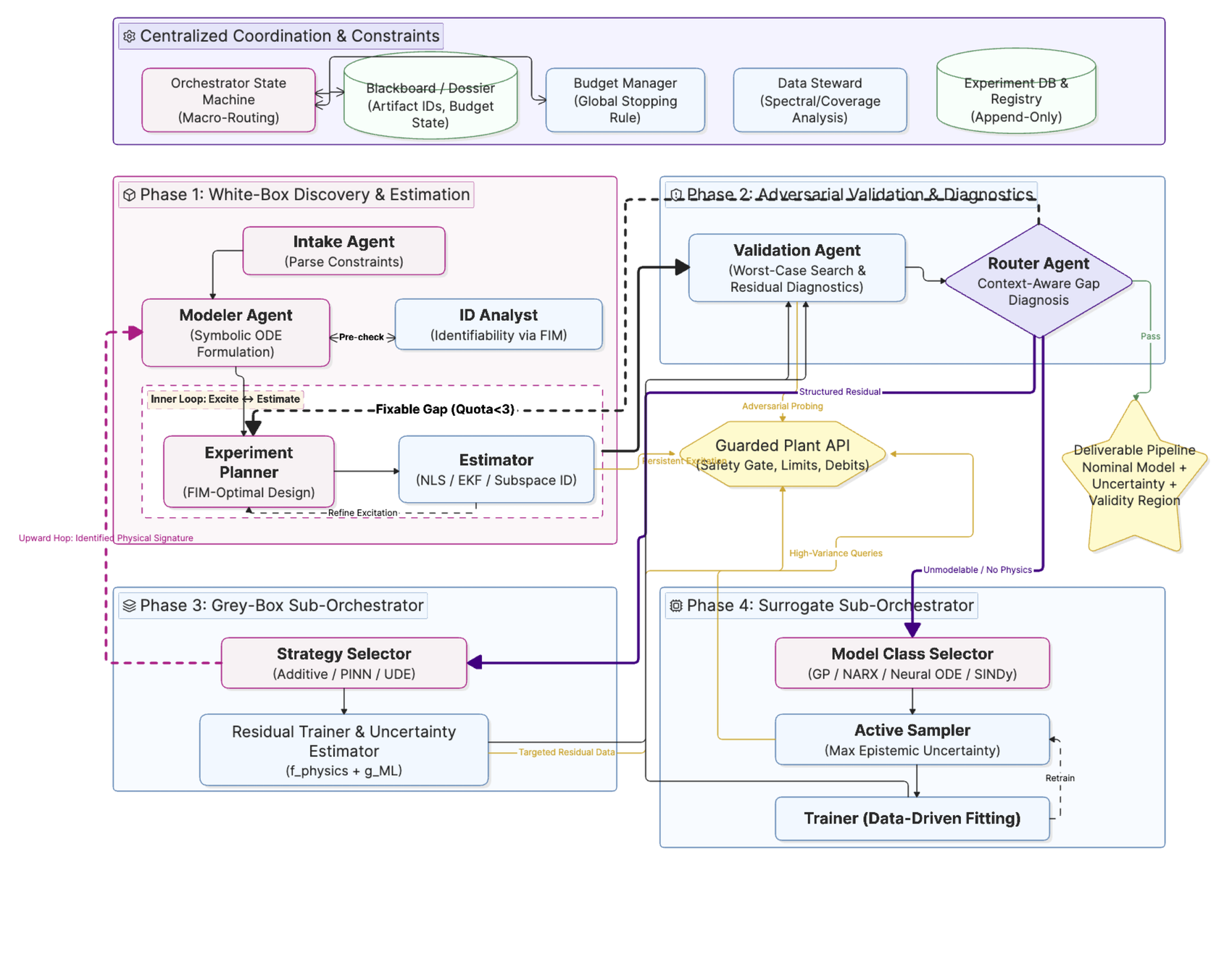
Large language models are good at breaking a problem into steps, worse at knowing when to stop trusting their own steps. This theme is about giving agents explicit escalation logic instead of open-ended autonomy: Agentic-SysID only escalates from a physics-based model to a learned one when adversarial validation actually finds evidence the physics doesn't hold; DecoSearch routes text-to-SQL queries by estimated difficulty and repairs failing query plans instead of regenerating from scratch; Game Analyst forces two adversarial debates to converge through a judge rather than trusting one model's first answer. TimeRAG, applying retrieval-augmented reasoning to time-series forecasting, is in progress.
Systems: Agentic-SysID → · Game Analyst →
CH.4 — Generative Models
Generative models for structured data
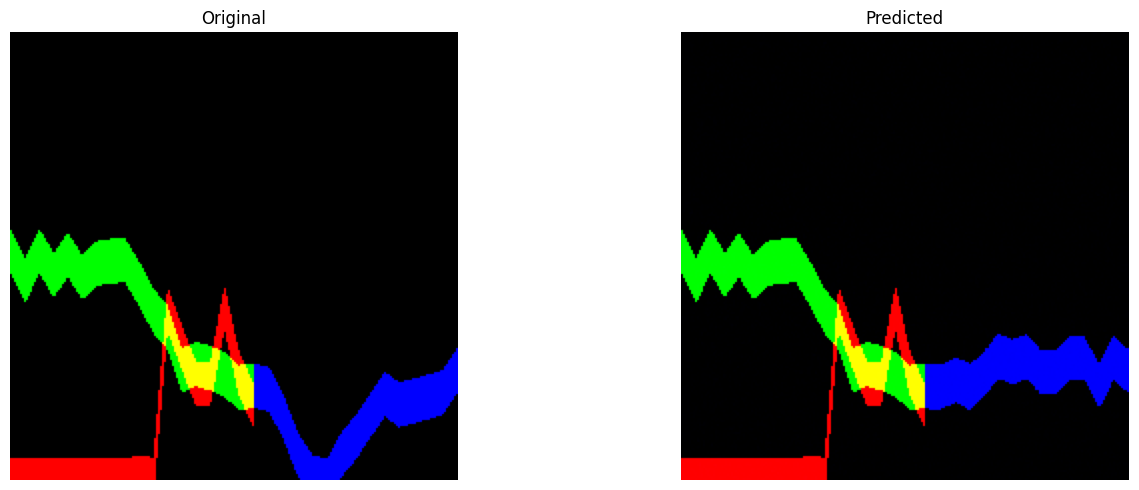
Diffusion models are usually applied to images or audio, but the underlying idea — learning to reverse a noising process — works on any data that can be encoded as a structured tensor. DDIM Time Series tests that directly: stock price and volume behavior encoded as a multi-channel image, with a diffusion model learning to generate the missing channel. A separate line of work applies discrete denoising diffusion (DiGress) to graph explainability, using a generative model to explore the space of plausible explanatory subgraphs instead of searching combinatorially.
System: DDIM Time Series →